Construction · Win the Bid
How to Bid a Construction Job: The Complete Guide for Contractors
A plain, step-by-step plan to bid a construction job: read the plans, nail the takeoff, price it right, and present a number that wins. Sourced from U.S. Census Bureau and Bureau of Labor Statistics data.
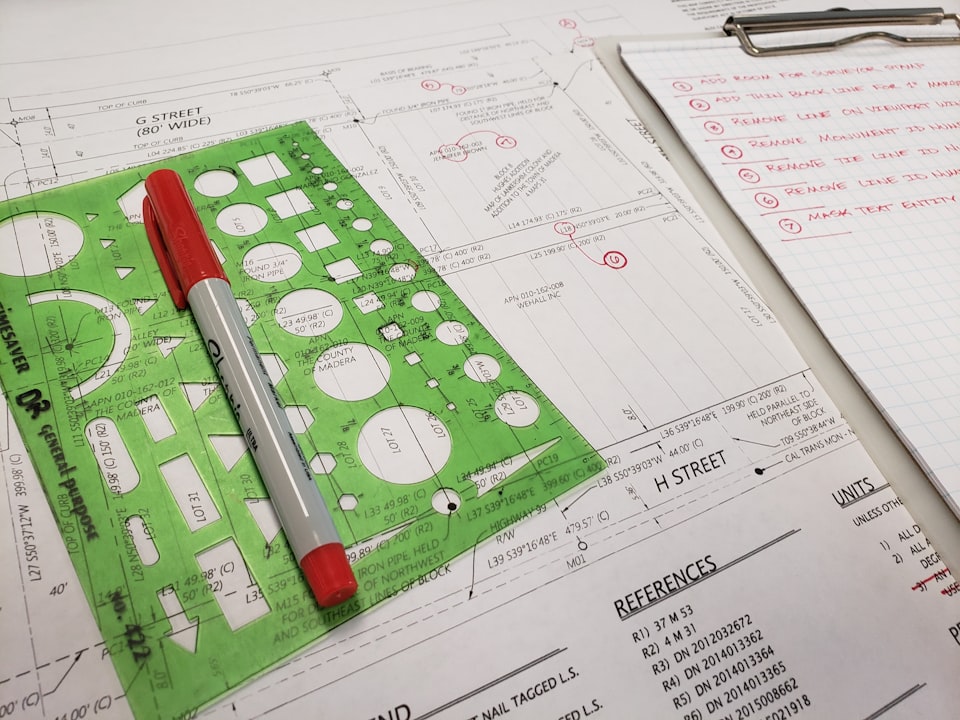
- Read the plans and specs before you price anything.
- Walk the site, then count every material in a careful takeoff.
- Price labor at its fully burdened cost, not the hourly wage.
- Add overhead and profit as two separate numbers.
- Present a written bid with scope, exclusions, and payment terms.
- Follow up on a schedule and track every bid you send.
How to bid a construction job in 2026
To bid a construction job, run six steps: read the plans, walk the site and do the takeoff, price labor at its real cost, add overhead and profit, present a clean written bid, and follow up. U.S. Census Bureau data puts construction spending at a $2.2 trillion annual rate for May 2026. But Bureau of Labor Statistics data shows only 51.2% of construction establishments opened in the year ended March 2019 were still running six years later. A good bid is not the lowest number. It is the right number, built on a system.
The 6 steps to bid a construction job
-
Read the plans before you price anything
Rushed plans cause estimating errors. Before you price a single line, nail down the scope, the dimensions, and the exact material specs. Tile is not the same as 12×24 rectified porcelain. Read every note and every addendum.
-
Walk the site, then do the takeoff
Never bid a job you have not walked. Check access, existing conditions, and demo surprises like asbestos, and photograph everything. Then count every stud, sheet, and box, one trade at a time. Add a 5 to 15% waste factor by material. A takeoff error compounds through the whole bid.
The takeoff is the slowest part of any bid. Snap a photo of the job and the SimplyWise Cost Estimator turns it into an itemized estimate in about 6 seconds, so you get more bids out the door.
-
Price labor at its real cost
Labor is usually the biggest number on the bid and the easiest to get wrong. Use production rates from your own past jobs, not guesses. Price the fully burdened rate: wages plus payroll taxes, workers comp, and insurance. It runs well above the paycheck. Add a 5 to 10% labor contingency, more on older homes.
-
Add overhead and profit, separately
Overhead is the cost of running the business: truck, insurance, tools, and your own unbillable hours. Divide annual overhead by expected revenue. If $120,000 of overhead sits on $600,000 of revenue, that is 20%. Profit goes on top, because overhead is not profit. Our guide to protecting your profit margin shows where the leaks hide.
-
Present a bid that sells the job
A clean, written bid builds trust before the client reads the price. Spell out the scope, the exclusions, the payment schedule, the timeline, and a 30-day expiration, because material prices move. Start from a free general estimate template, and walk the client through the bid in person.
-
Follow up and track every bid
Most bids die in silence, not on price. Call on day 2 or 3, again on day 7, and once more on day 14 with a schedule nudge. Win or lose, log the job type, the amount, and the outcome. A full pipeline lets you skip bad jobs; our guide to getting more construction leads keeps it full.
The math on a $50,000 kitchen bid
Here is how the pieces stack on a mid-range kitchen remodel. The dollar figures are an example; the structure is the point. Every line has a basis you can defend.
| Bid line | What it covers | Amount |
|---|---|---|
| Direct costs | Materials, labor, subs, and permits | $38,500 |
| Overhead at 20% | The business costs this job must carry | $7,700 |
| Profit at 10% | Your pay for carrying the risk | $4,620 |
| Total bid price | The number the client sees | $50,820 |
Four mistakes that sink good bids
- Underbidding to win. A job won at the wrong price is worse than a job lost.
- Forgetting your own time. Estimating and managing hours belong in overhead, or you work free.
- Ignoring price swings. Material prices move fast, so put an expiration date on every bid.
- Vague scope. Install new flooring is loose. 150 square feet of engineered oak with trim is a scope.
We break down the worst ones, with fixes, in our guide to estimate mistakes and how to fix them.
Bid faster with SimplyWise
The takeoff and the estimate eat most of the hours in a bid. The SimplyWise Cost Estimator turns a photo of the job into an itemized estimate in about 6 seconds, so the walkthrough and the written bid happen the same day. Receipt scanning and mileage tracking file the real job costs that sharpen your next bid. It is free to try.
Sources
- U.S. Census Bureau, Monthly Construction Spending, May 2026 ($2,210.2 billion seasonally adjusted annual rate in May 2026).
- U.S. Bureau of Labor Statistics, Business Employment Dynamics, Table 7, Survival of Private Sector Establishments, Construction (51.2% of establishments opened in the year ended March 2019 still operating March 2025).
The lowest bid does not win the good jobs. The clearest bid does. A clean number backed by a real takeoff shows how you will run the work.
SimplyWise Editorial
Frequently asked questions about bidding a construction job
Speed and win rate
How long should it take to bid a construction job?
Plan on 4 to 8 hours for a typical residential remodel, covering the site visit, the takeoff, pricing, and the bid document. Big commercial work can take weeks. Digital takeoff and estimating tools cut that time sharply.
What is a good bid-to-win ratio?
Winning 25 to 35% of your bids is the healthy zone. Below 15%, your price or your lead quality is off. Above 50%, you are almost certainly priced too low and leaving money on the table.
Price pushback
How do I handle a client who says my bid is too high?
Ask what they are comparing it to. The lower bid is often missing items yours includes, like permits, cleanup, or warranty. Walk them through the scope side by side. If they still want a lower number, cut scope, not margin.
Should I include a contingency in my bid?
Yes, especially on renovation work where hidden conditions are likely. A 5 to 10% contingency is reasonable on a standard remodel. Show it as its own line item and explain that unused contingency is never charged. That builds trust.
Markup and contract type
What markup should I use on subcontractor bids?
A standard general contractor markup on sub work is 10 to 20%. It covers your time coordinating the sub, your liability for their work, and your profit. Some contractors go higher on specialty subs.
Is it better to bid lump sum or time and materials?
Lump sum fits well-defined projects because you keep the profit from working efficiently. Time and materials fits uncertain scope, like opening walls in an old house. Many contractors bid lump sum for the defined scope and time and materials for discovered conditions.
Get the next bid out the door today.
Turn a job-site photo into an itemized estimate in about 6 seconds, then send a clean written bid while the competition is still measuring. Free to try.